Guangzhou Haike Electronics Technology Co., Ltd.
E-mail: eva@gzhaike.com
Address: 613th Tainan Rd, Dongchong Town, Nansha District, Guangzhou, 511453, PR. China.

Merkel's successor: German election candidates face off in crunch TV debate
September 13, 2021
Early snap polls suggested that the Social Democrat (SPD) chancellor candidate Olaf Scholz did enough in Sunday evening's three-way TV debate to maintain a slim but solid lead over his rivals in the final straight of the election campaign.
Just moments after the 90-minute "truel" ended on Germany's public broadcasters, an Infratest dimap poll found that 41% of the 1,500 viewers asked found Scholz the most convincing, a long way ahead of the Christian Democratic Union's (CDU) candidate Armin Laschet and the Green party's Annalena Baerbock, on 27% and 25% respectively.
That suggested Scholz had successfully fended off the barrage from his conservative rival Laschet, who, as expected, spent the early part of the debate trying to bait Finance Minister Scholz out of his unperturbed demeanor. But those attacks ebbed later in the debate when the candidates were forced to present policy details.
Struggling with the radicals
Laschet was quick to score the points he was eager to make against Scholz, first demanding to know once again whether he would countenance a coalition with the socialist Left Party. Scholz refused to be drawn, as he did when challenged by moderator Maybrit Illner on why he had not yet presented a potential government team or a shadow cabinet for after the election.
But Laschet himself was soon under pressure over his own party colleagues, specifically CDU candidate in eastern Germany Hans-Georg Maassen.Maassen, a former domestic intelligence chief, has frequently drawn criticism over nationalist remarks that many believe belong more to a far-right party than a center-right one.
Laschet refused to say whether or not he would vote for Maassen if he lived in his constituency. "There are a lot of differences between me and Mr. Maassen, and he will have to stick to the course that I set as party leader," he said.
Thorny money laundering questions
Scholz, meanwhile, was forced on the defensive when asked about recent raids by state prosecutors on the Finance Ministry, part of a probe into the government's FIU anti-money laundering department, an agency of Finance Ministry.
"If my finance minister had worked like you, we would have had a serious problem," Laschet, currently state premier of North Rhine-Westphalia, told Scholz.
Scholz, prepared for the attack, angrily accused Laschet of painting a misleading picture and played down the investigation, because it was centered on the possibly illegal activities of a single employee in Cologne. He went on to point out that he had expanded financial oversight at the ministry since his tenure began in 2018.
For her part, Baerbock used the opportunity to attack both the parties currently in government for failing to do enough about the billions that the state loses every year through tax evasion and money laundering. "Now we're clearly seeing that there's a huge problem," she said.
Climate crisis
Baerbock was at her strongest when challenging the men on either side of her about their parties' record on the climate crisis. "We are missing our climate targets, with dramatic consequences, and you have both made clear that you didn't orientate yourselves around the solutions, but just pushed the blame on each other about who was hindering what," she said.
Picking up a frequently-used line in her campaign, Baerbock argued that the next government would be one of the last to have an active effect on the climate crisis. "That means we have to get away from coal power earlier, and significantly earlier than 2038 (the current target)," she said. "But we can't carry on for the next 17 years as if nothing was happening."
Both Scholz and Laschet claimed that their parties were taking the crisis seriously, though both made a point of underlining the importance of protecting Germany's leading industries — specifically the auto and the chemical industry.
"The German auto industry is long since on the path to adjusting," Laschet said, before accusing both Scholz and Baerbock of wanting to hamstring industries. "It won't work with laws, with bans, with regulations, but with a dynamic where everyone is keen to create something new."
Scholz also said that Germany was facing "the biggest industrial conversion for well over 100 years." "We have 250 years of economic and industrial history behind us, based on coal, gas, and oil," he said. "And if we are to change that now, that means we have to do an awful lot, for it to really work."
The SPD went into Sunday's debate with a six-point lead over the CDU in the latest poll (26% vs. 20%, the INSA poll said), with the Green party another five points behind on 15%. If the snap polls following Sunday's debate are anything to go by, the CDU is running out of time to close the gap.
The Social Democrat (SPD) candidate to become Germany's next chancellor beat his conservative rival in a primetime TV debate on Sunday, a snap poll showed, further boosting his campaign to succeed Angela Merkel in an election in two weeks' time.
The SPD leads the conservatives in polls and its candidate Olaf Scholz, currently finance minister, brushed off verbal attacks from Armin Laschet on his record on tackling money-laundering and whether he would ally with a far-left party.
A snap poll for ARD television taken soon after the 90 minute debate showed that 41% of those asked thought Scholz was the most convincing performer, compared to 27% for Laschet and 25% for the Greens candidate, Annalena Baerbock.
Laschet accused Scholz of failing in his supervision responsibilities in light of raids last week on the finance and justice ministries that were part of an investigation into the government's anti money-laundering agency. read more
"If my finance minister were to work like you, then we would have a serious problem," said Laschet.
An unruffled Scholz cast Laschet a steely look and accused his opponent of twisting facts and being "dishonest" by suggesting there was a probe of his ministry, whereas investigators simply needed information from it.
The conservatives are missing the pulling power of Merkel, a conservative, who is not running again after four election victories and 16 years leading Europe's biggest economy.
An opinion poll on Sunday showed that the SPD had extended their lead over the conservatives. The INSA poll put the SPD on 26%, up a point from a week ago and at their highest rating since June 2017. The conservatives were unchanged at 20% and the Greens were down 1 point at 15%.
In the last three months the conservatives have lost 8-9 percentage points. Laschet, the jovial if uncharismatic leader of Germany's most populous state North Rhine-Westphalia, is trying to make up for mistakes during the campaign.
'OOOOPS'
In a damaging gaffe, he was caught on camera laughing during a visit to a town hit by lethal floods in July. He apologised.
This week's edition of the influential Spiegel magazine has a front-cover picture of Laschet holding his hands in front of his mouth with the headline "Oooops".
In the debate, Laschet also pressed Scholz on whether he would form an alliance with the Greens and the far-left Linke, which opposes NATO and is critical of many aspects of the EU.
Scholz again declined to rule out working with the Linke, arguing first that voters must have their say in the election. However, he made clear that there were clear differences between the parties which would make a coalition very difficult.
"An acknowledgement of transatlantic relations, NATO and the European Union are necessary for a good government," he said.
Baerbock, whose Greens have also lost around 10 percentage points since highs in April and May, said Germany faced a stark choice between a new start or getting bogged down in "more of the same". "Germany can do so much more ... This is a big chance for our country," she said.
Most experts think a three-way coalition is the most likely outcome of the election - a scenario that could take several months to negotiate during which time Merkel remains chancellor.
Germany's general election on Germany's economic recovery under the Covid-19 pandemic
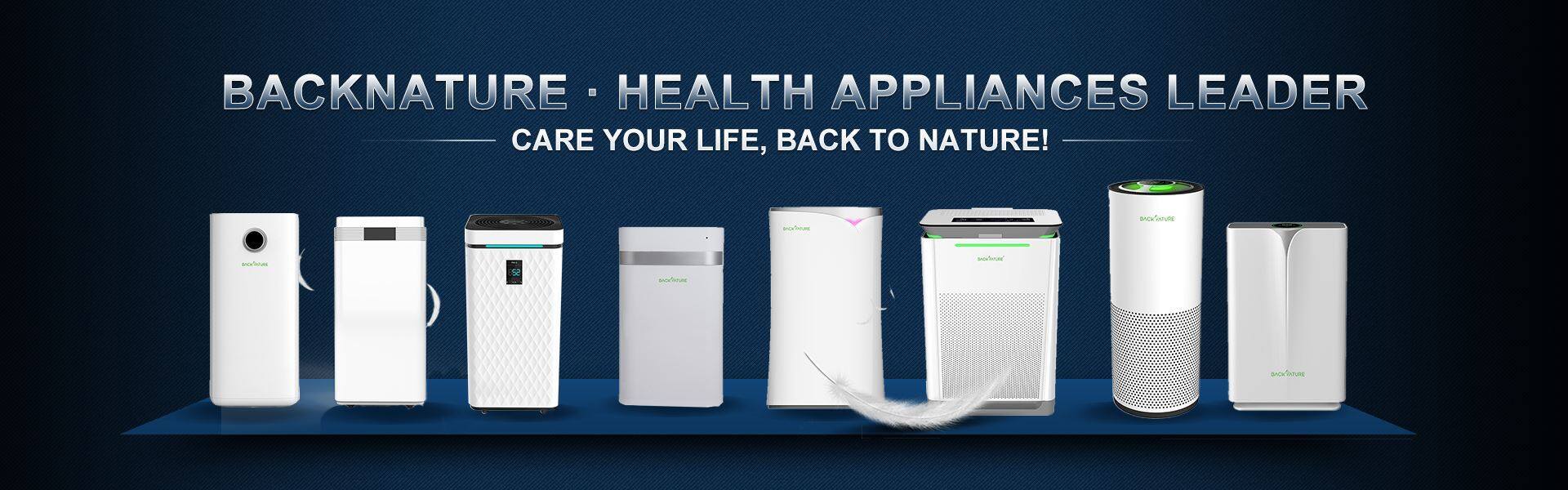
Under the Covid-19 epidemic, air quality has further attracted the attention of the people, and the market demand for air purifiers has also grown rapidly.
Hoko has been focusing on the R&D and manufacturing of household air purifiers since 2005. It has 12 independent production lines, an annual production capacity of 520,000, more than 30 R&D engineers, and more than 60 product designs. The products are CE, ETL, FC , ROHS and other certificates are complete, which is the most powerful supply chain for you to expand your brand.
Quote for price right now!

 русский
  日本語
日本語 Deutsch
 Italiano
 Español
 عربي
عربي  Français
 Português


